“Giving is the highest expression of potency.” Erich Fromm
This morning I woke up to the news that US stealth bombers dropped 30,000-pound bunker busters on Iran’s nuclear facilities. To me, this action sets up the ultimate test of military potency. Were the bombs “successful” in eliminating Iran’s nuclear capabilities? We don’t know. Do Iran and its proxies still possess enough potency to attack American interests in the region? We don’t know. Will North Korea, Russia, China, and Iran’s proxies respond? We don’t know. Does this surge represent the beginning of the end or simply a whole new beginning? We don’t know. I will leave it to the pundits and scholars to determine the answers to those questions, although I don’t think we will understand the real impact for many years.
What may go down as one of the most consequential events in history made me think about the nature and implications of power and potency. While related, power and potency refer to different aspects of strength or influence. Potency emphasizes the inherent capacity and capability for action; power refers to the actual exercise of those capacities and capabilities to influence or control. In simpler terms, potency is about the potential to act, while power is about what it actually does.
Even though we won’t know the actual effectiveness of this recent exercise of military potency and power, what we do know is that, after thousands of years of council – starting with Lao Tzu in 500 BCE – soft power overcomes hard power over time. And yet, we still continue to rely on hard power to “solve” seemingly intractable and enduring problems.
To be clear, given Iran’s history and declared intentions, it may turn out that this decision will prevent the destruction of Israel and will diminish the horrors of terrorism exhibited by Iran and its proxies over the last several decades, culminating in the October 7 massacre of Israeli citizens by Hamas. I don’t pretend to know what unintended consequences may unfold or to think I have anything to add to this discussion. I’m writing this post for three reasons: 1) to resist early celebration of “spectacular success” when nobody knows what reactions and consequences we are about to experience—short term or long term; 2) to raise the question of where we find our sources of potency in the lives we have been given; and 3) to question what happens when military potency is not combined with wisdom, love, and joy.
Lao Tzu, in his classic work Tao Te Ching, emphasized the power of flexibility, yielding, and embracing softness as a means of overcoming rigidity and strength. He didn’t use the modern term “soft power,” which refers to influence through attraction and persuasion, but his principles align with its core ideas. Lao Tzu famously states that “the soft overcomes the hard.” He uses water as a metaphor, highlighting its ability to erode and wear down even the hardest substances over time. This belief illustrates how seemingly weak and yielding approaches can be more effective than forceful, rigid ones in achieving desired outcomes. While not directly about persuasion, Lao Tzu’s notion of “effortless effort”, suggests acting in alignment with the natural flow of things – achieving goals without excessive effort or force. This resonates with the idea of soft power, where influence comes from allowing others to want what you want, rather than forcing them to act. In short, Lao Tzu highlights the importance of finding potency in humility.
I worry that the decision to bomb Iran was based more on hubris than humility.
In my morning meditation, I give thanks for the people who represent for me the most powerful examples of humility AND potency. I start with Socrates, Plato, and Aristotle, who demonstrate the potency of questions to change how we think and relate.
I give thanks to Epicurus, Lucretius, and Diogenes of ancient Greece, who challenged us to think of aligning our lives with Nature and the potency of pleasure in our lives.
I give thanks to Copernicus, Galileo, and Newton, who introduced us to the potency of science and math to change our lives and see the world through an entirely different lens, shifting scientific understanding of the universe from an Earth-centered view to a heliocentric view.
I give thanks to Italian thinkers Donatello and da Vinci for showing us the potency of art to inspire us through precise anatomical representations.
I give thanks to German thinkers Goethe and Mann for demonstrating the power of literature to see our world in fresh, new ways and for highlighting the artist’s duty to carefully observe the phenomena of life and foster compassion.
I give thanks to Fuller and Einstein, both expelled from institutions of conventional education, for revealing the potency of physics to reconceptualize the entire universe and for understanding the fundamental nature of the universe and its underlying principles.
I give thanks to Wittgenstein and Kierkegaard for inviting us to explore the ineffable and existential and for questioning our ability to express the deepest aspects of human life through language as well as deep truths solely through reason.
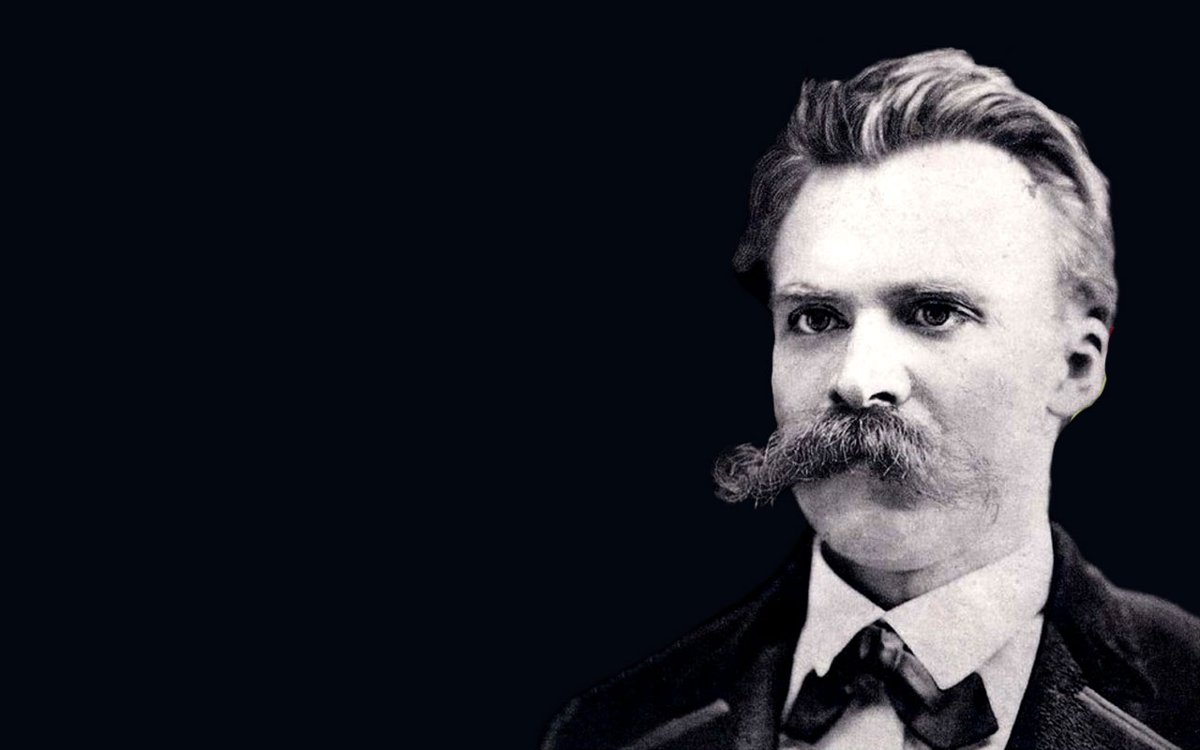
I give thanks to Nietzsche, Descartes, and Rousseau, who confronted us with the need to think differently about power and freedom, criticizing the impact of modern society, morality, and religion on worldviews and values—emphasizing the spiritual depth of individuals.
I give thanks to the Russian thinkers Gogol, Tolstoy, and Dostoevsky for exploring the complex themes of suffering, faith, and the human condition—for the profound impact they had on morality, psychology, and culture.
I give thanks to John Lennon, who dared us to imagine a different world in which we live for today, in peace and with generosity to others.
Finally, I give thanks for the voices of European women like Hannah Arendt, Simone Weil, Simone de Beauvoir for challenging prevailing social and political norms and for grappling with questions of freedom, responsibility, and the impact of historical events on individual lives. Also, for the voices of American poets Mary Oliver, Joy Harjo, and Naomi Shihab Nye for helping appreciate the importance of noticing and celebrating small moments and mundane details and for finding solace and resilience in overcoming adversity.
To me, these voices, particularly the women, represent real potency. Sadly, those are not the voices being amplified and heard.
We have the enormous gift of being able to tap into sources of wisdom and potency of brilliant thinkers from all over the world and from all periods of human history on this planet. We have the incredible gift of being able to benefit from the writing of brilliant women, poets, and philosophers who have shared their hard-earned wisdom and have reminded us that we have the potential to experience the potency of love and joy in our short lives. And yet, it seems, we are not giving sufficient weight or attention to those sources of potency. Instead, we keep normalizing and accepting hard power “solutions” to enduring divisions and conflicts without addressing the cultural conditions that keep producing these divisions, conflicts, and endless wars. Maybe we should spend more time meditating and less time militarizing.
By definition, military potency and power are focused on destroying threats to our safety and well-being. The potency expressed by the sources of wisdom I highlighted above is achieved through science, literature, poetry, philosophy, language, spirituality, and psychology. It’s those expressions that have the potential and possibility to create the conditions that might lead to more peaceful solutions.
Let me end with the lyrics from John Lennon’s song, Imagine.
I’m hoping, as we live through the consequences of exercising military potency and hard power, that we will not forget about the sources of soft power that have been calling out to us throughout the ages. I am hoping we will act in humility instead of hubris. I’m hoping we will couple whatever hard power is required with the wisdom of the ancient philosophers. I’m hoping that we will remember that giving—not taking and destroying—is the highest expression of potency. I’m hoping that we can imagine a different future for ourselves and the world. May it be so.


Well said Ricky! Thank you!