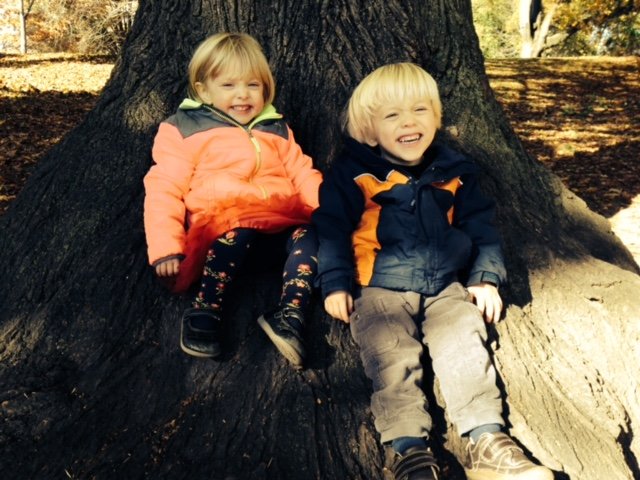
Last week, I was walking on a gorgeous trail in Olympic National Park with my grandson when he asked me, “What are the key philosophies and principles that guide your life?” (My grandson knows how to ask terrific questions—and he knows the kind of questions that delight me). After a long “hmmm,” I responded, “The Buddhist philosophy of the willingness to open to opening to openness, and a quote from T.S. Eliot: ‘At the still point of the turning world, there is the dance—and there is only the dance.’” I proceeded to use our hiking experience as a way to explain both of those concepts.
Here is the essence of the conversation:
“When you were a little boy, your default response to most invitations to new adventures was, ‘Nope, I’m not doing that!’
- “Do you want to go for a run?” “Nope, I’m not doing that!”
- “Do you want to go to sleep away camp?” “Nope, I’m not doing that!”
- “Do you want to go for a long hike?” “Nope, I’m not doing that!”
“As you grew older, you became more open.” Even though you were reluctant and resistant, you often responded, “Ok, I’ll try that.”
“What you realized when you faced your fears and took the risk to try new things, you often admitted that, ‘Oh, now I get it.’
- “I feel better when I am fit.”
- “I have fun and make new friends when I have to share my space with several other kids.”
- “I see and hear more of the beautiful sights and sounds of Nature when I go for walks.”
“Now, as you experience the wonders of these woods, you may even say, ‘Ahh, I understand.”
I continued: “First, you have to open to the fresh, new, and different. Then, you may understand why the risks sometimes lead to unexpected bliss. Finally, by being open to that opening, you may experience the awe and wonder that is constantly opening before us if only we are awake and present in the moment.”
Ok! Oh!! Ahhh!!! The three responses you hear when you open to opening to openness.
Even though my grandson is very tolerant of my musings and missives (Indeed, he even encourages me with his questions and reinforces me with his comments), his response to this discussion was, “DadDad, I think I’m going to push you off the trail!” I can’t say I blame him.
On a more esoteric level, those are the same three responses that often occur when a person becomes open to the idea of therapy, experiences a deeper understanding of themselves and others, and incorporates a meditation practice in their lives. For a wonderful overview of that process, listen to one of the best Ezra Klein interviews I ever heard with Mark Epstein, a Harvard-trained Buddhist psychiatrist. In that interview, Klein and Epstein discuss those exact phases without specifically referencing the language I am using in this post. I highly recommend it.
In short, for many people, therapy results in the “Oh, now I get it!!” response. And for those who are not only open to therapy but also committed to meditation, they may experience—after many years of practice—the sensations of opening to the openness of a cosmic or universal energy.
Since we were only three miles into our hike and still had to return, however, I pressed on with the T.S Eliot quote: “At the still point of the turning world, there is the dance—and there is only the dance.” Ten years ago, I wrote a post entitled Dance, which you can see here.
To me, the real meaning and practical application of the quote is that we are living in a chaotic and tumultuous time that keeps our heads and hearts spinning. Indeed, the earth even appears to be accelerating its rotation around the sun. Finding a sense of stillness and learning how to dance in spite of all the turmoil seems like a worthwhile goal.
So I said to my grandson, as we were trekking our way back to the trailhead, “Instead of seeing this experience as a forced march, you may want to see it as a joyful dance.” I’m sure that comment got an eye-roll, but he was kind enough not to make it obvious. I went on, “As you take each step, try to find a rhythm and center your energy just below your navel. If you are able to do that, you will find that the walk becomes more effortless and may even become energizing.” Even though I knew I was pressing my luck here, I ventured on. “The Chinese philosophers, like Lao Tsu, call this Wu Wei or effortless effort.” While Ezra was surely tempted to say “No way to Wu Wei,” he said, “Ok, I’ll give it a try.” Although he didn’t express it, I believe he experienced an “Oh” or even an “Ahh.” But I was afraid to ask if that was true.
The point I did make, however, is that experiencing the joy of effortlessness takes real effort. The most graceful dancers are those who have spent years training how to move with ease and flow. When I first learned how to play the guitar, getting my fingers on the right frets and strings to play a chord seemed impossible. Now, after five years of practice, my fingers move to the right places more effortlessly. Walking mindfully feels clumsy and forced at first, and then the movements flow more naturally.
In TikTok world—of which I am totally ignorant and purposely avoid—there is a new trend on Aura farming. One of the most popular videos is of an 11-year-old Indonesian child who appears to be doing tai chi on the prow of a racing boat. The image is a terrific representation of staying calm in a storm. He says he invented the dance spontaneously. Now elite athletes are viewing it as a lesson in inspiring and energizing their respective teams. To me, it illustrates the beauty and effects of finding stillness in a churning world. Maybe I should be spending more time on TikTok.
So, how can we apply these two principles of opening to Ahh and experiencing stillness as we find a way to dance through this turning world in a way that energizes ourselves and others to meet this existential moment?
In a recent article in the NYT, Frank Bruni provides a good example by sharing his angst of watching the sacrifice of College’s soul. He discusses how the ease of A’s and the access to AI, in the face of the assault on higher education AND public education, have resulted in a degrading of loftier goals in pursuit of a rapid route to fame and fortune in technology, finance, and consulting. As a result, many college students have not only abandoned deep reading and rigorous analysis, but they have also cheated themselves in the process. To me, the point he brilliantly makes is that we are marching to oblivion by devoting all our efforts toward the adding of 0’s to our bank account instead of Oh’s and Ahh’s to our life experience.
We are living at a time in which it has never been more important to open our minds, open our hearts, open our hands, and yes, open our souls. Unfortunately, we are living under an administration that is all about closing. They are closing down funding for science and technology that are critical for reinventing our future—think solar power, EVs, and AI. They are closing the small window of opportunity we had for repairing our broken environment—think water and air. They are closing down the funding for education—think student loans, colleges, and public schools. They are literally closing the books that open minds. They are closing off relationships with our economic partners and our military alliances. They are closing down infrastructure investments—think transmission grids and charging stations. They are closing down the dreams and aspirations of marginalized people to feed the greed of the privileged. They are closing down civil rights, voting rights, and reproductive rights. They are closing down the health care systems that provide safety and security. Closing, closing, closing. And the only dances we are seeing are the spineless congressional and Supreme Court two-step of sucking up to a selfish bully in the biggest bully pulpit in the world, the obsequious shuffle-steps of big media, big legal, and big education, and the joyless dance of MAGA on the graves of the victims. Oy!
I’m hoping my grandchildren will continue to open themselves to more “Oh’s” and “Ahhs” and that they can find stillness in this turning world. I’m hoping that they will come to realize that life can be a joyful dance—and there is only the dance. And I’m hoping that they will continue to make the effort to make that journey more effortless. Finally, I’m hoping they will continue to go on hikes with me in spite of my blathering and bantering.
Perhaps we can all learn from the 11-year-old Indonesian who has demonstrated the possibilities of joyful dance. Perhaps, at a minimum, we can remain open enough to say, “Ok, I will keep on trying. May it be so.

Thank you my friend!