“Out of suffering have emerged the strongest souls; the most massive characters are seared with scars”. Kahlil Gibran
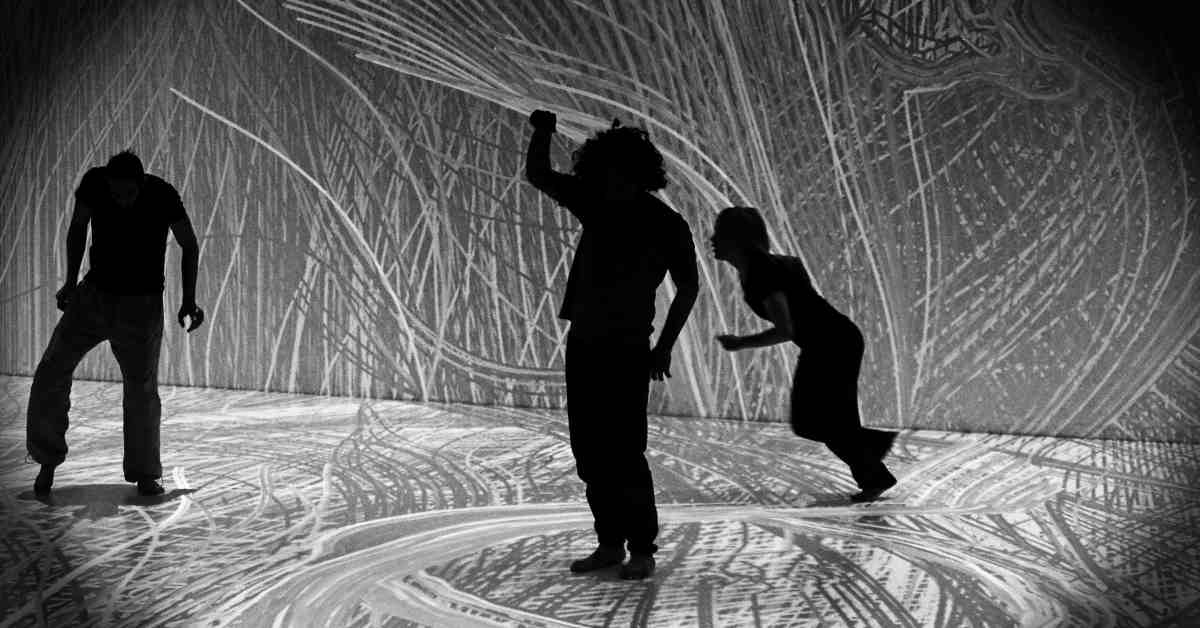
Every great story has at least two narratives – the thing that is on the surface and then the things underneath which are invisible. Ali Smith
One year ago, I wrote a post on Hanging on to Hope based on a song by Mumford and Sons. It’s the song that helped my family get through 105 days in the NICU with our preemie grandkids. Here are the lyrics to the chorus:
I will hang on hope
And I won’t let you choke
On the noose around your neck
And, I’ll find strength in pain
And I will change my ways
I’ll know my name when it’s called again
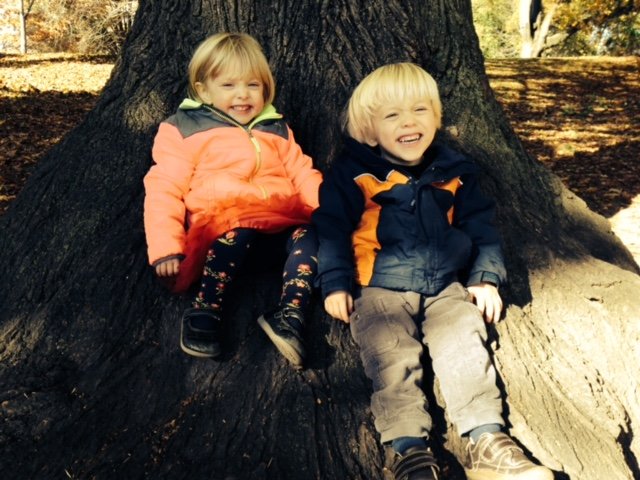
During that 105 days, my wife and I would occasionally go for an ice cream break. Nothing like a chocolate chip cone to sweeten your day. On one occasion, someone cut in line in front of my wife, and she broke down crying. This is not my wife. She is as tough and stoic as it gets. But, in this moment, the pain that she had been invisibly carrying couldn’t be contained any longer. A tiny offense unleased the flood she had been holding within. From that point on, we have always tried to remember that people are probably carrying more pain than we can possibly realize. Most of us have searing scars and multiple narratives. Fortunately, there’s a rather miraculous narrative evolving with our grandkids – they are now 14-years-old, thriving and getting stronger by the day. Infinite possibilities await them.
In the broader context, however, we have all suffered through a very painful year. It feels like the noose keeps tightening and hope keeps eviscerating. During this year, we have witnessed wars in Suda, Gaza, Ukraine, and Venezuela; we have endured Trump’s assault on democracy and decency; in the last week we saw killings at Bondi Beach, Brown University, and in the Reiner’s home; and we have suffered personal losses as well. It’s harder and harder to keep the pain invisible.
Thankfully, I came across several works of art to help me deal with the losses we have experienced AND still hang onto an elusive sense of hope – nothing like books, plays and movies to give you a new perspective. The books are Antidote by Karen Russell and Theo of Golden by Allen Levi. The play was Maybe Happy Ending, and the movies were the two PBS/Ken Burns series on the Revolutionary War and the Civil War plus the movie, Nuremberg. Let me briefly summarize the themes.
The book, Antidote, primed the pump for this post on pain and possibility. The story revolves around a “witch” who is able to absorb memories people want to forget – the bad things that have happened and/or the things they have done in their lives they don’t want to remember. Ahh, what we choose to remember and what we choose to forget.
The “witch” stores the memories in her “vault” and thus frees her clients from the burdens of remembering either what happened or the pains of who they really are behind the façade they present. Oh, how I would love to forget some of the losses I have experienced and the bad deeds I have committed – it would be much easier not to admit to the reality of some of my demons. Sorry, you will have to guess what they are.
One key sentence toward the end of the book stopped me in my tracks. Referring to the losses she experienced in her own life, the “witch” ponders “the infinity of what might have been, and was never allowed to be.” It is not only a question we might all want to ask about past and current events, but- even more importantly – to think about that question in the present and for the future in our own lives, i.e. “What could be if only we would allow it?”
The second book, Theo of Golden, builds on the theme of invisible pain. It captivated me for the first half and left me turned off in the second half. The story is about a famous author who goes incognito to a small town to observe how a son he never met (his wife left him before the child was born) was faring in his life. It turns out that his son is a portrait artist who had drawn pictures of local residents and displayed them in a popular coffee shop. When Theo, the father, sees the depth of understanding his son has captured in the portraits, he decides to purchase all of them and give them as gifts to each of the people his son has drawn without revealing his true identity or the fact that he was his father. What moved me was the interactions Theo had with each of the beneficiaries of his generosity. In his presentation of each gift, he attended fully to the person receiving the gift, looked beyond the façade the person was presenting, and shared his insights and observations as kindly and authentically as he could. As a result, each person let down their defenses and connected on a deeper level than they had intended. The stories were very touching. Sadly, the author lost me when he started integrating and “promoting” his ideas of God and heaven in those interchanges. I will spare you a riff on that subject and refer you instead to a post by NYT columnist, David French (a devout Christian), on the dangers of Christianity.
Both books, however, not only reinforced the primary premise of this post – that most of us carry invisible pain – but also made me wonder if pain is not as invisible as we may like to believe if we simply notice and provide a space for people to open up.
The play, Maybe Happy Ending, staged at the Belasco Theatre in NYC, is the story of two human-like robots who have been “retired” for newer models. They are living their last days in an apartment for aged-out robots whose batteries are dying and/or whose replacement parts no longer exist. The woman robot realizes her batteries are running low and her charger is broken. In desperation “she” knocks on the “neighbor’s” door across the hall, whom she has never met, to borrow his charger.
As you might imagine, “they” discover “feelings” for each other and embark on a journey together to find the “male’s” owner whom he “believes” is a friend. At the end of the play, both humanized robots – in an increasingly roboticized human world – discover the passwords that will enable them not only to choose whether or not to erase painful memories (for example, their relationship and its impending doom), but also to decide when they want to “die” to avoid become progressively disabled. Whew, that hits home. In short, they became empowered with agency and autonomy.
Hmmm, I feel a bit jolted by all the highly charged questions in that paragraph: Have humans become more “roboticized” as robots have become more humanized? Which memories would we prefer to erase? How much agency do we have to make decisions about how we live and how we die? Where does this all end? How do we live with the reality of our own death and the death of loved ones? And might there be a happy ending – real possibilities?
Finally, the three movies/series I watched that brought home the point of why so much of history – because it is so painful – is far too convenient to forget: The Revolutionary War, The Civil War, and the Nuremberg Trials. The first two were produced by Ken Burns and are available on PBS in two hour episodes. The last, a recent movie, Nuremberg, will be available on Netflix in early 2026. The Revolutionary War revealed the horrors, heroism, and hardships of our brutal battle for independence. The Civil War reminded me of how inequity, intransigence, and immorality divide our country and destroy our souls. And the Nuremberg Trials showed how the desire for dominance, dehumanization, and delusions of grandeur erode our humanity. The lessons I take away from all those plays, books and movies are:
- Dominance leads to Dependence which results in Lose/Lose relationships. (Nuremberg and Civil War)
- Individual Initiative leads to Independence which, at best, results in Win/Win relationships. (Revolutionary War)
- Generosity leads to Interdependence which results in Grow/Grow relationships. (Every book, play, movie, and life experience)
The questions I’m still struggling with are: What do we choose to forget and why? What are we not seeing behind the thin facades people present? What might have been and still may be possible if we allow ourselves to remember, to notice, and to open up? What’s harder to deal with – regret or loss?
When I think about those questions, I wonder: What if we had paid more attention to the environment and continued the reciprocal relationship with land and water as Native Americans did? What if we had opened up to the possibilities of emotional and spiritual evolution without the rigid constraints of ideologies and identities? What if we all saw ourselves as an integral part of an interconnected, global community? What if we had freed ourselves from the boundaries that limited our thinking and being. What if we were able to survive the invisible and very visible pain we have experienced, AND somehow shift our focus to the infinite gains that are possible in our lives?
Since there are no easy answers to these complex questions, let’s return to some basic definitions:
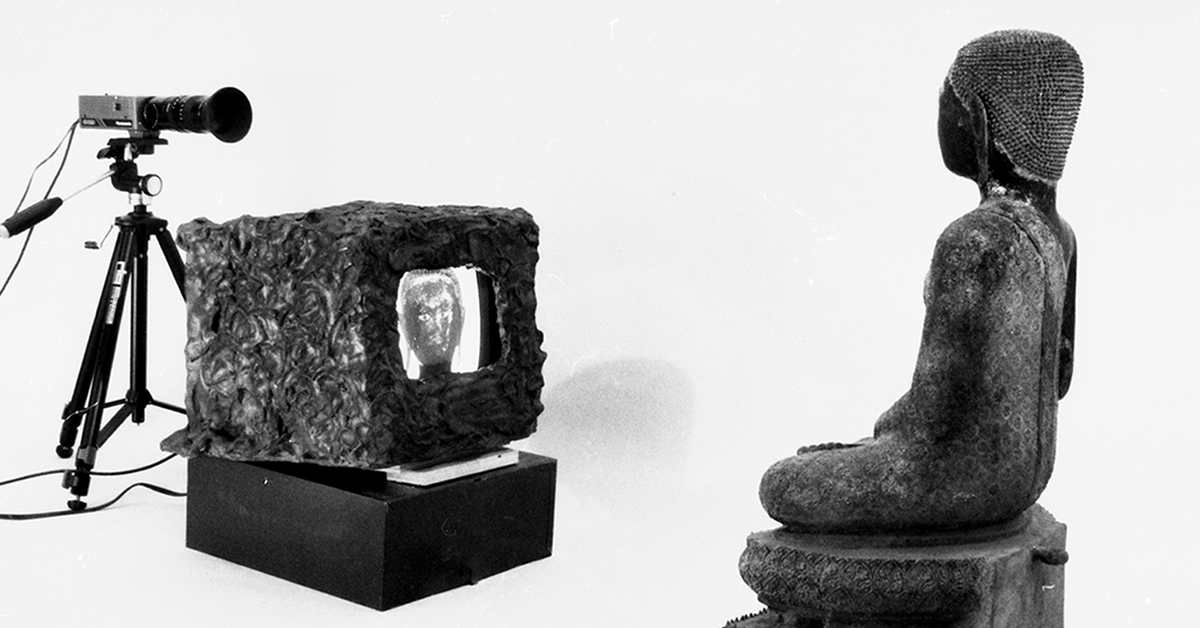
Invisible loss, like grief from unseen disabilities or suppressed sorrows, often involves profound inner struggles and the quiet endurance of the soul. The idea that the deepest losses are what die within us while we still live, reminds us that our true selves and connections endure beyond physical presence, even when unseen.
Infinity is defined (hmm, can you define infinity?) as a space, quantity or period of time that is without limit. For me, limit is the key word. What limits do we impose upon ourselves or others that don’t allow, much less enable, what might have been or might become? The truth is that it’s almost limitless the way we limit ourselves.
The far right limits itself by fixating on border security at the expense of due process and human decency. The center insists that the best deterrence to war is through more military hardware at the expense of diplomacy and modern technology (e.g. drones and cyberwar). The far left insist on ponderous processes that preclude fast decisions and abundance (e.g. housing). To me, over-reliance on borders, bombs, and bureaucracies to solve all our problems limits what we “allow” for possible solutions.
Once those boundaries, borders and bureaucracies are established and rigidly entrenched, it becomes almost impossible to transcend them. The biggest boundaries tend to harden through religious beliefs, cultural norms, and the need for certainty and righteousness, if not supremacy.
Here is a short summary: there is so much we would like to forget and so much possibility that is “not allowed.” As my astute granddaughter said in response to my last post (the shortest ever): “Sometimes there is no need for so many meaningless words.”
Invisible loss can make individuals feel they lose a part of themselves, becoming “invisible even to themselves – often due to cultural pressures to hide deep unhappiness or struggle. But I think Gibran got it right: the strongest souls are often seared with scars. Perhaps it’s time we remember the scars, celebrate the strengths, and embrace the possibilities.
In this New Year of 2026, I’m hoping we can do a better job of seeing the invisible pain that we all harbor at one level or another. I’m hoping we can be more open to finding sources of infinite possibility that we may not have allowed in the past. And I’m hoping that we can do a better job of remembering, noticing, and opening. May it be so.