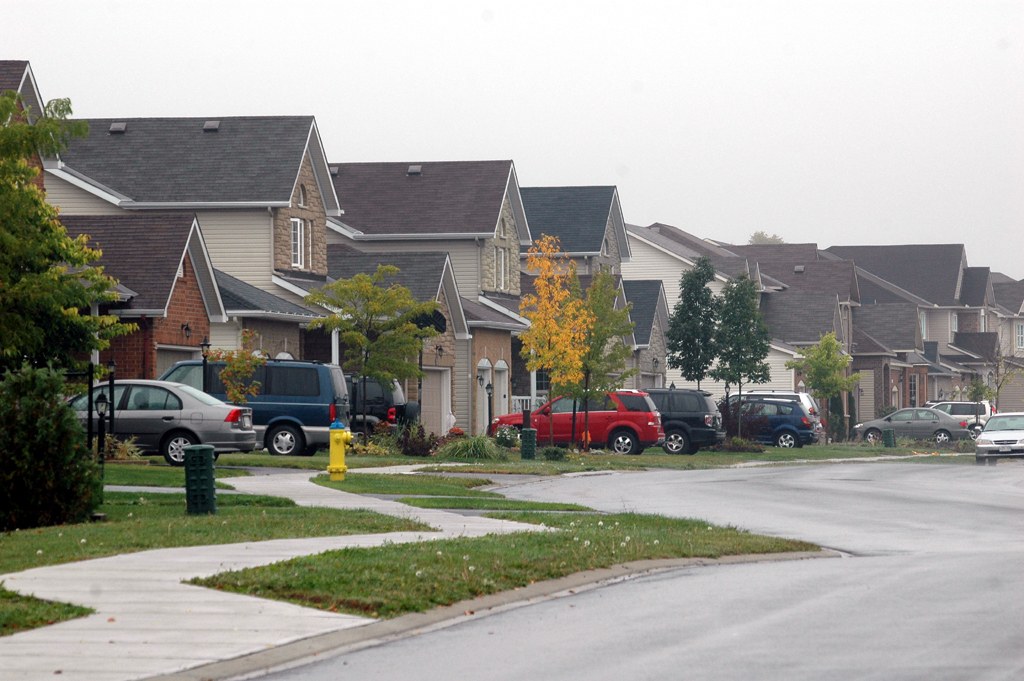
I’m going to start this post with quotes from four people from very different “neighborhoods” with very different perspectives: a politician/inventor, an author, an artist, and a football coach. You might expect to hear opposing points of view from such a variety of voices. And yet, it turns out, they all agree on the importance of good neighboring.
Let’s start with Benjamin Franklin, a founding father and signer of our constitution, who said: “Be at war with your vices, at peace with your neighbors, and let every new year find you a better man.”
Franklin suggests that we would do well to wage war with our internal demons instead of our imagined devils. I think he is right. If we devoted more energy toward defeating our own vices, we might be more successful not only of making peace with others but also growing as human beings. Is that not what we were put on earth to do?
Our second voice, Zora Neale Hurston, was an African American writer and anthropologist who portrayed racial struggles in the early 20th-century South. Hurston said, “Love, I find, is like singing. Everybody can do enough to satisfy themselves, though it may not impress the neighbors as being very much.” In her most famous book, Their Eyes Were Watching God, published in 1937, Hurston describes the struggle to find our voice and to express our authentic selves more freely and neighborly. I highly recommend it.
To me, Hurston’s simple quote captures two big ideas. First, love is like singing—it is measured in expression. Second, our ‘good enough” threshold for love may be much lower than we might believe it to be, i.e., we like to imagine ourselves as being much more loving than our neighbors perceive us to be.
Our third voice, Marc Chagall, was a Russian born, French artist, a major figure in Jewish art, and a pioneer of early modernism. I love this quote: “All colors are the friends of their neighbors and the lovers of their opposites.”
As an artist, Chagall recognized that a range of colors could come together to create something much more beautiful than monochromatic representations. In his art, Chagall employed vibrant blues, deep reds, and bright yellows. And, even though his painting involves sharp contrasts, the colors were always complementary. In his life, Chagall also included sharp contrasts: Russian, French, Jewish, and a bohemian mix of Eastern European immigrants. I would love to know how complementary those relationships were—they were most certainly colorful. Since Chagall also said that love is his primary color, I can imagine him being a good neighbor to all sizes and shapes. And yet, he has a reputation for selfish behavior driven by artistic obsession.
Our fourth voice, Lou Holtz, was a legendary football coach who is best known for leading Notre Dame to a 12-0 season in 1988. He also led 5 other teams to bowl games over the course of his career. One of his quotes—probably not the favorite of his fan base—stands out to me AND reinforces the message in this post: “If you burn your neighbor’s house down, it doesn’t make your house look any better.” As we continue on the destructive binge of breaking lives and burning houses around the world, I’m afraid it doesn’t make our house look much better.
Oh, how I wish we would start listening to the voices that sing of peace, beauty, free expression, love, and reason. All of which brings me to the primary question I want to pose in this post: How can we create a culture in which we are better neighbors to each other—locally, nationally, and globally.
Three recent articles in the NYT today pretty much sum up how daunting that kind of culture change is in the world. The first talks about the shift in the billionaire mentality re: The Giving Pledge. In this piece, Theodore Schleifer details the backlash that has occurred since 2010 when Warren Buffett and Bill Gates agreed to persuade fellow billionaires to give away half of their wealth to nonprofit causes. That sounds like good neighboring to me.
After an initial surge of non-binding commitments, however, the enthusiasm has waned. In fact, it is now stylish to bash the pledge. As one member of the B-Club said, “Now, I can keep my head down and keep making money. I don’t have to put up with this charity charade anymore.” Apparently, it was just a PR strategy for many of those with all the money. The billionaires have decided, instead, that buying elections to enhance their net worth is a more worthy investment than helping people be better neighbors and better people. Ugh. Such a good idea though.
The second article, by Thomas Friedman showcases the “neighboring” mentality at the core of the Minnesota resistance. Friedman, my go-to source for an informed and reasoned approach to whatever crisis we may be facing, shares how people stepped up to the draconian measures taken by “homeland security” to fill deportation quotas. In this piece, he shares stories of the brave men and women who ventured out in the freezing cold in the face of ICE—in all forms—to protect good people next door or down the block. As a native of Minnesota, Friedman discusses the changing demographics of Minneapolis since he lived there as a child and how people, for the most part, have come together as neighbors to build a diverse community that works. It is truly an inspiring message.
The third article, by David French, discusses how we have become more polarized and filled with hate than ever before. While I disagree with French on many issues, I respect and appreciate his attempts to provide an honest, fair, and balanced perspective. In this piece, he shared the results of a 25-country survey, which included a cross section of European, Asian, African and American nations. The sobering conclusion is that the United States was the only country in which a majority of adults surveyed said that the morality and ethics of their fellow citizens were either bad or somewhat bad. These survey results tell me that the conditions for culture change in America are not exactly what one might call ideal. Hatred for each other does not lead to being good neighbors.
Sadly, antisemitism, Islamophobia, and racism have all increased in the last few years. Hate crimes are spiking—driven not only by pundits and politicians but also by social media and AI. There is clearly a need to reimagine what neighboring might look like.
For me, the three articles describe two ends of a scale and the conditions in which we are trying to implement change. Here’s the scale:
5.0: Neighboring (Caring, connecting, and building community)
4.0: Giving (Sharing generously and graciously)
3.0: Getting (Achieving our independent goals)
2.0: Taking (Acquiring whatever we want through whatever means necessary)
1.0: Abusing (Using power to exploit, dominate, and intimidate whoever gets in the way)
The challenge, as always, is how to inspire people to move up the scale. It seems to me that, instead of “neighboring,” the world seems to be “othering.” I will leave it up to you to rate where we are, overall, on the scale. You might want to ask, “Where might your neighbors rate you?”
Ultimately, being a good neighbor is an exercise in civic grace. It requires us to step outside our individual bubbles and acknowledge that our well-being is interdependently linked to those around us. In a world that can often feel fragmented, hostile, or indifferent, a good neighbor acts as a local anchor, proving that kindness doesn’t have to be a grand gesture—it can simply be the act of being a decent person right where you are.
Let me end with a wonderful translation by Haleh Lize Gafori of a poem originally written by Rumi, a Persian mystic, in the 13th century. And here we are in the 21st century at war with Persia. Oy.
“Man, man, man,
what kind of lightning are you, setting farms on fire?
What kind of cloud are you, raining down stones?
What kind of hunter?
Caught in your own trap—
a thief stealing from your own house.
You’re sixty years old, you’re seventy years old,
and you’re still uncooked?
Still won’t let Love’s flames near,
won’t let them burn you up?
Enthralled by stuff and status,
the crown, the turban, the king’s beard—
thorns pricking your hands,
but where is your flower?
Gazing in the mirror,
you tilt your hat like a crescent moon—
but where is your light?”
Pretty much says it all. He could have been describing our situation today: setting farms on fire, raining down stones (bombs), and caught in our own trap.
I’m hoping we can let love near before we are cooked. I’m hoping we will find flowers and lights instead of flames and blights. In short, I’m hoping we get better at neighboring than othering. Finally, I’m hoping we will start listening to the voices of poets, artists, songwriters (and even coaches) instead of bullying, boasting billionaires. May it be so.