My granddaughter is a prolific reader. Recently, she told me about one of her favorite books, Katabasis, by R.F. Kuang. I read it right away and found it fascinating.
Kuang’s book is a fantasy novel about two graduate students traveling into Hell to retrieve their deceased professor. It is a biting examination of ambition, intellectual competition, institutional power, the pursuit of excellence, and the human cost of achievement.
The title comes from the ancient Greek concept of katabasis—a descent into the underworld, often undertaken as a journey of discovery or transformation. Ms. Kuang uses that classical structure to explore the underworld of modern academic life.
The central characters are Alice Law and Peter Murdoch, two brilliant graduate students studying at Cambridge University under Professor Jacob Grimes, a formidable and influential scholar of magic. Both students have invested enormous amounts of their lives in academic achievement. They have sacrificed relationships, personal interests, and much of their emotional well-being to distinguish themselves in a fiercely competitive environment.
When Professor Grimes dies, Alice believes that her future—and the intellectual recognition she has worked so hard to obtain—may be lost. She and Peter decide to descend into Hell to retrieve him. Their journey takes them through the circles of the underworld, drawing on Dante’s Inferno and other classical mythology. They encounter extraordinary dangers, moral tests, and people whose lives have been shaped by ambition, intellectual vanity, unfettered greed, unleased desire, and the endless pursuit of power.
But the most difficult part of their journey is not navigating Hell. It is navigating their relationship with one another. Alice and Peter are rivals and increasingly complicated partners. They must confront their resentments, their competing ambitions, and the ways their professor has manipulated and shaped them. The journey ultimately forces Alice to reconsider what she has been pursuing, why she has pursued it, and what she has sacrificed along the way.
The book’s central theme is the corrupting influence of ambition. Alice is extraordinarily ambitious. She wants to be recognized as one of the best intellectual talents of her generation. But somewhere along the way, ambition becomes an end in itself.
She has come to believe that her worth is determined by her intellectual accomplishments—recognition by powerful people validates her existence, and failure is existentially threatening.
Kuang raises the question: When does the pursuit of excellence become a form of self-destruction?
The academic environment claims to reward intelligence, hard work, and achievement. Kuang, however, exposes the influence of power, privilege, favoritism, exploitation, and access to influential mentors. Grimes is the embodiment of this contradiction. He is brilliant and influential, but also manipulative, abusive, and self-serving.
His students tolerate his behavior because they believe association with him is essential to their success. The institution protects its “stars”, even when those stars damage the people around them. Sound familiar?
Alice and Peter have been conditioned to regard one another as competitors. They are both exceptionally capable, but their relationship is complicated by jealousy, insecurity, comparison, and the desire for recognition. Their journey into Hell requires them to depend on each other. Gradually, they discover that their intellectual abilities are more powerful when combined with trust and collaboration.
Competition encourages people to protect their knowledge and demonstrate superiority. Collaboration encourages people to share knowledge, acknowledge vulnerability, and build on one another’s strengths. Kuang suggests that intellectual brilliance without meaningful relationships is ultimately impoverished.
Professor Grimes represents a particularly dangerous form of leadership: the brilliant individual whose accomplishments become an excuse for his behavior (think Jensen Huang or the tech bros). He uses his authority to manipulate students, exploit their insecurities, and maintain their dependence on him. His students rationalize his behavior because they believe the benefits of proximity to greatness outweigh the costs. This raises a fundamental organizational question:
How much destructive behavior will an organization tolerate from someone it considers indispensable to their “success”? Hmmm.
Alice uses logic to rationalize decisions that are emotionally and morally damaging. The distinction is between knowing how to think and knowing how to live. The novel suggests that wisdom requires humility, self-awareness, moral judgment, and an ability to question one’s own assumptions.
The most profound question is whether a person has intrinsic worth independent of achievement. Alice has invested so much of her identity in becoming an exceptional magician that she cannot imagine a meaningful life without that accomplishment. Her journey forces her to confront the possibility that she has been pursuing someone else’s definition of success.
For me, the book becomes particularly interesting from an organizational psychology and leadership perspective. Kuang is not arguing against high achievement, intellectual rigor, or excellence. She is challenging the assumptions and cultural norms that often accompany the pursuit of exceptional performance. She describes an environment where the pursuit of excellence has become detached from the conditions that make excellence sustainable.
Ambition becomes winning is all that counts vs. connecting to a meaningful purpose; Leadership is defined as authority based on brilliance vs. interdependence, innovation, and integrity; Relationships are built on rivalry and comparison vs. trust and collaboration; Accountability is excused for “exceptional” performers vs. applied equally for all; Learning means having the right answers and demonstrating superiority vs. asking the right questions and acknowledging uncertainty; Commitment is measured by exhaustion and sacrifice vs. sustainable performance and well-being.
An organization that depends on exceptional individuals rather than developing exceptional relationships is vulnerable. An environment that confuses harshness with rigor (and humiliation with intellectual development) becomes toxic quickly. People perform better when they can challenge assumptions, acknowledge mistakes, ask questions, and disagree without fear of retaliation. When institutions become more concerned with preserving their prestige than examining their practices, they erode the very values that made them successful in the first place.
I would argue that Katabasis is a case study in what happens when an organization fails to cultivate the three cultural foundations of Trust, Interdependence, and Purpose.
- Trust: A healthy culture makes candor, intellectual disagreement, and mutual respect possible.
- Interdependence: A healthy culture recognizes that collective intelligence, complementary strengths, and collaborative relationships produce results that individual brilliance cannot achieve alone.
- Purpose: A healthy culture connects individual achievement to something larger than individual advancement.
There is an important distinction between a high-achieving culture and a high-performing culture. A high-achieving culture can produce extraordinary individual accomplishments while simultaneously damaging relationships, undermining well-being, and compromising ethical standards. A genuinely high-performing culture produces exceptional results because it creates the conditions in which people can do exceptional work together.
The ultimate measure of a high-performing culture is not simply what its people accomplish, but who they become in the process of accomplishing it. Katabasis is a cautionary tale about organizations that confuse prestige with purpose, individual brilliance with leadership, competition with excellence, and personal sacrifice with commitment. It also makes a compelling argument for creating organizations in which people can be both extraordinarily accomplished and fully human.
I know. That was a long review of a book, but I thought its message merited a full commentary. It also serves to set up the poem I wrote to my kids and grandkids, as a result of reading the book, that personalizes the message. Here it is:
Life is hard sometimes.
And sometimes you will have a hard time too.
There are many “hells” in the world.
You don’t need to pretend with me
That all is well in your life and the world.
I love what is real in you
No matter how that manifests
I don’t love you for how you look
I don’t love you for how you feel
I don’t love you for what you think
I love you for who you are . . . . always.
I don’t care if you got 9 out of 10
Or 12 out of 10
Or 3 out of 10.
I love you for who you are . . . . .always
I don’t care if you go to Podunk College
Or Harvard, or Yale, or Smith
Or no college at all.
I just want what is best for you.
I love you for who you are . . . . always
Life is hard sometimes
And sometimes you will have a hard time too.
There are many hells in this world
You don’t need to pretend with me
That all is well in your life and in your world
I love what is real in you
No matter how that manifests.
I’ve spent time in the hells of
pride, desire, and greed –
Not so much the others.
As I get older, those hells
Take a lesser toll on my soul:
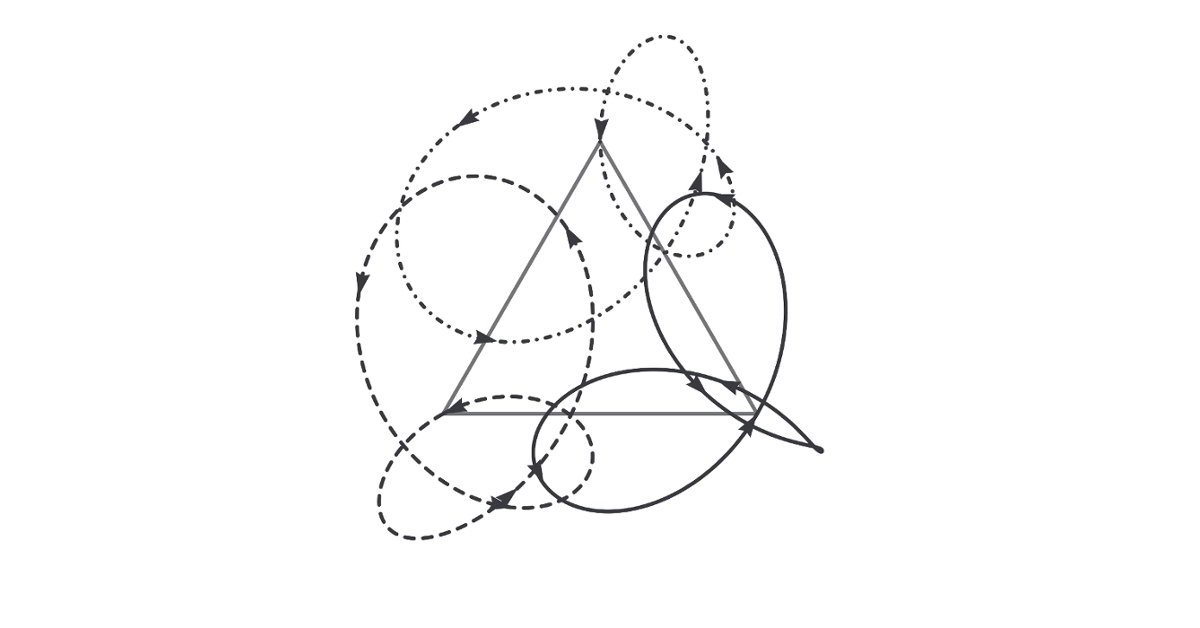
My horses have calmed down
My driver is less driven
My carriage keeps rolling along
And “I” am more in charge of all three.
As you get older, those hells
May take a different form
You may go down a different path
Your carriage may break down
One of your horses may want to break free from its reins
Your driver might get drunk on ambition
“You” will need to find your own magic to find your way home.
Yes, life is hard sometimes
And sometimes you may have a hard time too
There are many hells in this world
You don’t need to pretend with me
That all is well in your life and in your world
I love what is real in you
No matter how that manifests
I will love you for who you are . . . . . always
As parents and grandparents, I’m hoping we can focus as much on how well our kids and grandkids are blossoming, how much energy they are radiating, and how deeply they are connecting as we do on how brilliantly they are achieving, how strongly they are competing, and how quickly they are racing up the ladder. May it be so.