Tag: interdependence

Concepts and Skills
Stephen Ambrose, in his new book describing the construction of the Transcontinental railroad, Nothing Like It In the World, suggests that trains were the primary vehicle for introducing the industrial revolution. He quotes an engineer who said, “where a mule can go, I can make a locomotive go.” The poetry of engineering requires both the imagination to conceive and the skills to execute. We use concepts to frame our imagination, we use skills to build Read More

The Three Dimensions of Leadership Development
Everyone has an opinion on leadership. Amazon offers over 300,000 books with “leadership” in the title and about 4 new books per day are published by aspiring gurus or established academics. It seems like leadership commands as much curiosity as religion. Why is that? I think there are three reasons. First, readers are looking for different solutions for their particular needs. Some want to learn the secrets of a one-minute manager. Others want an in-depth Read More

The Seven Dimensions of Leadership Assessment
In my work as an executive coach over the past 30 years, I have developed a useful methodology for assessing leaders. It combines the best approaches I have learned from multiple sources. When I first started in this profession, the prevailing perception was that anyone who needed a coach was in trouble. The coach was hired to fix a problem. Fortunately, that perception has evolved over the years. Now, executives without a coach are questioned Read More

Consciousness and Culture
“Love is the motive, but justice is the instrument.” —Reinhold Niebuhr I have had a lot of heroes in my life. There are, of course, the historically popular figures like Gandhi, Nelson Mandela, Martin Luther King, Jr., Abraham Lincoln, Einstein, Churchill, and the Roosevelts (Teddy, FDR, and Eleanor). Add there are people currently living who make my list as well, like Nicholas Kristof, Gloria Steinem, and Barack Obama. As a result of some recent books Read More

Community and Connection
Walking onto the campus of Interlochen Arts Academy is like walking into a different world. For one, there is as much artistic genius per square foot as there is mathematical genius at MIT. There is also a richness of diversity. In a typical summer, 2,500 kids from all over the world and practically every state attend the camp for four to eight weeks of intense study in music, drama, creative writing, dance, and/or visual arts. Read More

Step Back
In 2013, Sheryl Sandberg’s Lean In became a massive cultural phenomenon, and its title became an instant catchphrase for empowering women. The book soared to the top of best-seller lists both nationally and internationally, igniting global conversations about women and ambition. Sandberg packed theaters, dominated op-ed pages, appeared on every major television show and on the cover of Time magazine, and sparked ferocious debate about women and leadership.

Harmonious Inclusion
I recently visited the Brooklyn Museum to see Judith Scott’s exhibit, “Bound and Unbound.” It was an amazing exhibition that displayed the chronology and complexity of Ms. Scott’s work with innovative sculptures, unique designs, diverse materials, and beautifully blended colors. What made it even more remarkable was her biography. Judith Scott was born deaf with Down’s Syndrome. At age 7, she was placed in a state institution and remained there until the age of 42. Her Read More

Holism
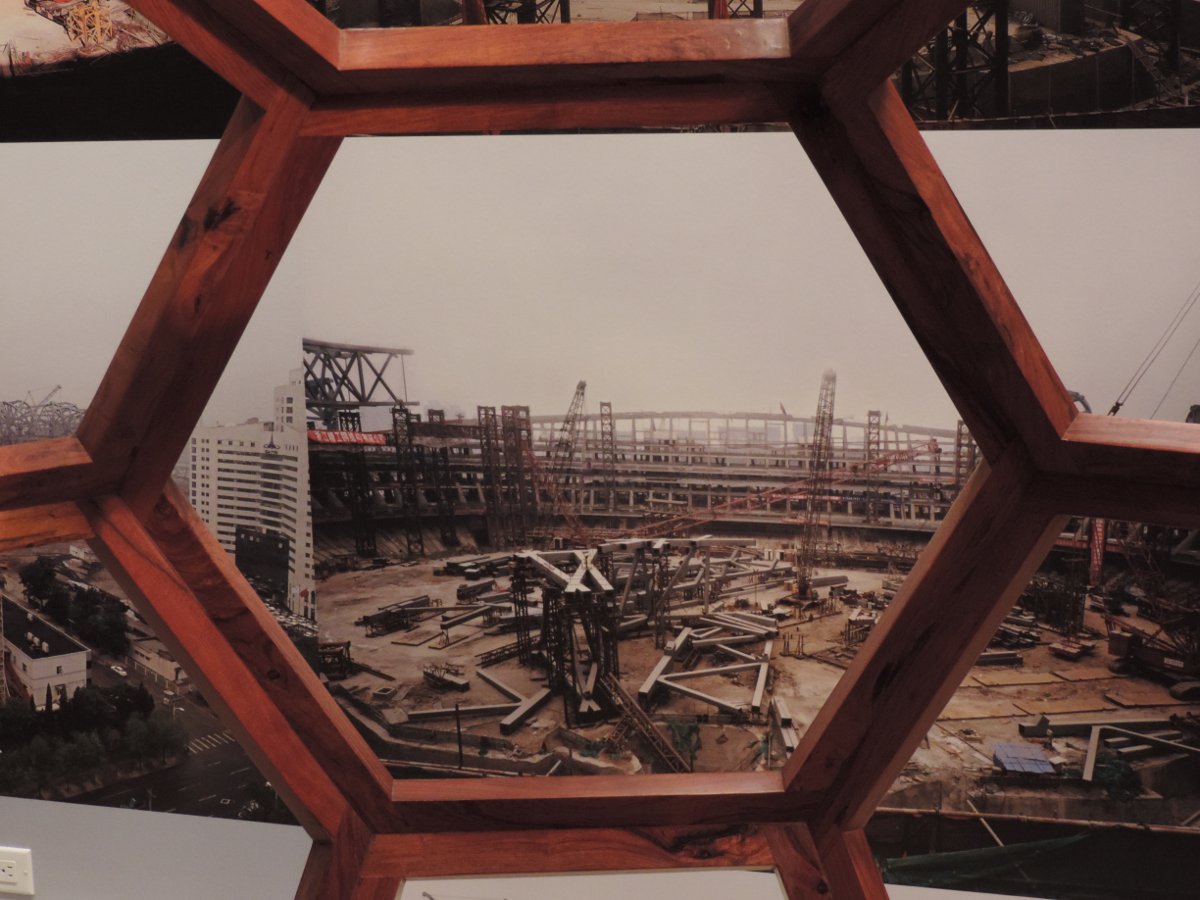
Holism is the theory that parts of a whole are in intimate interconnection, such that they cannot exist independently of the whole or cannot be understood without reference to the whole, i.e. the whole is more than the sum of its parts. If you believe in the power of synergy, then 2+2 may equal 5. While it is sometimes very useful from a scientific point of view to break things down into smaller and smaller Read More
Development or Deterioration
As I turn 70, I’m sure the first thought that crosses peoples’ minds when they meet me now is, “He’s old!!” Most people associate aging more with accelerated deterioration than continuing development. But I think there is no end point for development. Growth may take a different form or shape, but it doesn’t need to end.

Possibility
As the world veers ever more perilously toward the precipice, it doesn’t seem like a giant leap to suggest that we need a major shift in thinking and relating. Essentially, we need to start thinking about ourselves as connected vs. separate and we need to start relating to each other interdependently vs. competitively. This post will address the possibilities of making that shift and the planetary potential if we can make it happen. I will Read More

Interdependence
The featured photo in this post shows a polar bear in the Arctic Circle. This bear is at risk of extinction because we have failed to recognize that we are a part of an interdependent ecosystem. As a result of human behavior, the climate is changing so rapidly that the ice melt is threatening the bear’s ability to find food. In a recent article in the New York Times, “Capitalism Eating its Children,” Roger Cohen Read More

Conscious Dualism
Dualism means the tendency of humans to perceive and understand the world as being divided into two discrete categories. Dualism exists in many belief systems including Zoroastrianism, Christianity, Taoism and Confucianism. In these beliefs the universe is divided into the complementary oppositions, e.g. good and evil. In traditions such as classical Hinduism, Zen Buddhism or Sufism, a key to enlightenment is “transcending” this sort of dualistic thinking.