Tag: leadership development

Marketing and Leadership
“When you are made a leader, you aren’t given a crown; you are given the responsibility to bring out the best in others.” —Jack Welch, Former CEO of General Electric There is an old adage that leaders are born not made. That myth became popular as people observed that most leaders had personality traits such as intelligence, charisma, attractive appearance, and confidence. I believe the truth is that effective leaders are typically born AND made, Read More

Inspiration and Aspiration
“To understand the heart and mind of a person, look not at what he has already achieved, but at what he aspires to.” —Khalil Gibran, The Madman I once worked for a company that aspired to be a $10B corporation. I said to the executives at that time, “That may be a good goal but it surely isn’t a compelling vision, and it does nothing to inspire me.” I left the company after two years. Part Read More

Reciprocity
Are the facts you think you know about immigration in the U.S. actually myths?–and what does the psychological concept of reciprocity have to do with the concept of being an American?
Gauging Gurus
As Lao Tzu suggests, “when a person crowns himself as a guru, he is not.”
We should always be able to ask and answer: At what level are the people we entrust with power operating? In this post, I share my guide to evaluating leaders, gurus, and practitioners.

Assessing Leadership Potential
We are currently in a dark period resulting from dark forces (Trump himself, Comey, Putin, racism, sexism, homophobia, white supremacy, and ignorance).
In the midst of this darkness, we all need to take responsibility for growing whatever light we can find within ourselves and in the people we love.

P and E Trump I and S
When I was a kid growing up in the 50s, my whole life revolved around kickball, basketball, running, climbing and hanging out with a neighborhood full of friends. My community consisted entirely of white, Christian, straight (as far as I knew) people. My world was physical and emotional. I measured success by goals scored and games won, and by how many friends I had in the In-Group.
Three Types of Trust
I’ve been married to the same woman for 46 years, and I can say unequivocally that I totally trust her. I trust her to do the right thing, I trust her to not throw me the under the bus (even though I have given her many opportunities), and I trust her to stand up for people in need of special help. When she makes a statement, I know it is based on sound research; she Read More

Thinking and Believing
Believe me—Daniel Kahneman got it right: we are more likely to find stories that support our beliefs than seek out evidence in the pursuit of truth. Kahneman is a professor emeritus at Princeton University who wrote the best selling book, Thinking, Fast and Slow. His work is focused on the psychology of judgment and decision-making for which he was awarded the Nobel Prize in Economic Sciences. His findings challenge the assumption of human rationality. Clearly, Read More
Thank you, thank you, thank you
Every morning in my daily meditation, I give thanks for the earth, water, the sun, air, the time I have on this planet, the knowledge I have access to, the vastness of space, the healing energy of Light, my ability to think and process, sounds that I hear, love that I feel, hope that I cling to, the senses that let me experience the world, my sexuality, and my roots. Yup, starting the day with Read More

Concepts and Skills
Stephen Ambrose, in his new book describing the construction of the Transcontinental railroad, Nothing Like It In the World, suggests that trains were the primary vehicle for introducing the industrial revolution. He quotes an engineer who said, “where a mule can go, I can make a locomotive go.” The poetry of engineering requires both the imagination to conceive and the skills to execute. We use concepts to frame our imagination, we use skills to build Read More

Reckless and Righteous
Nicholas Kristof, the New York Times columnist, is a real hero to me. He goes where few journalists dare venture to report on atrocity and abuse. He raises uncomfortable subjects we would prefer to keep hidden or out of our consciousness. He confronts his fellow progressives on our blind spots. He challenges us not to be reckless in our language or righteous in our beliefs. In a recent NYT article, Peter Baker discusses how carelessly Read More
The Three Dimensions of Leadership Development
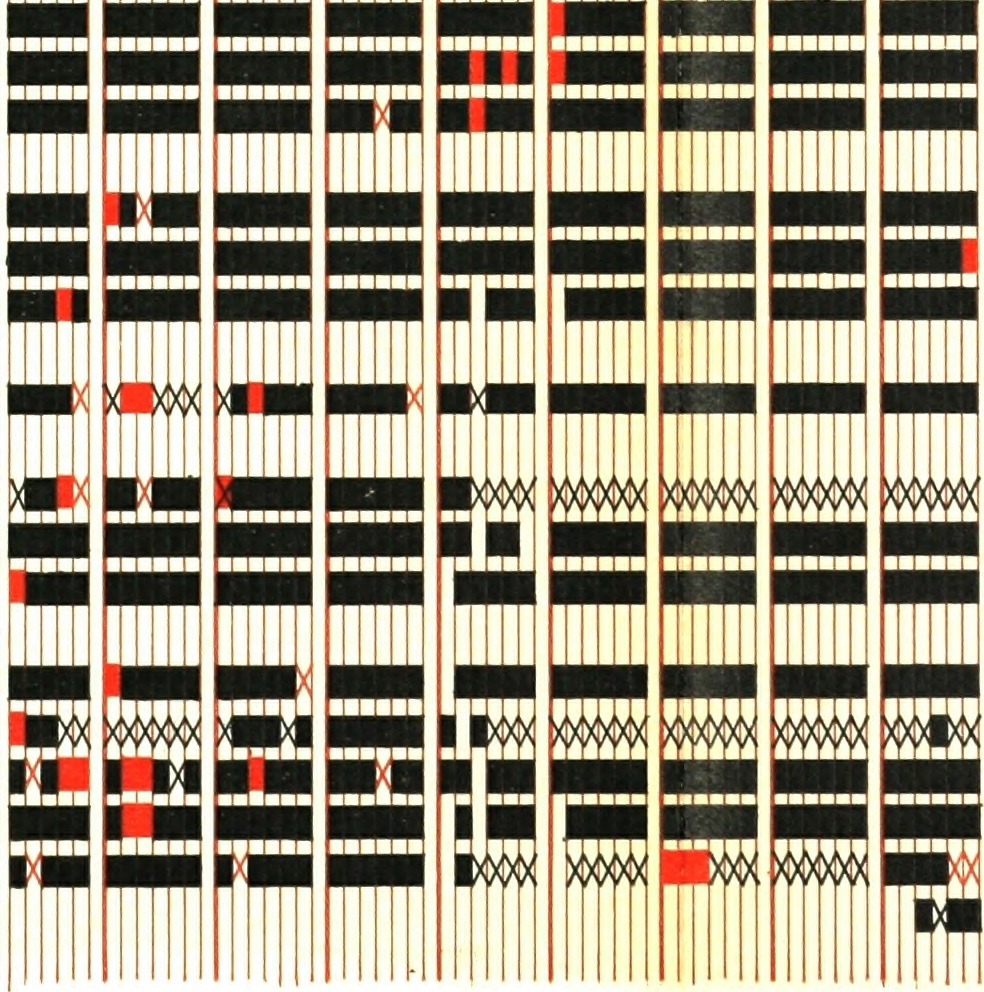
Everyone has an opinion on leadership. Amazon offers over 300,000 books with “leadership” in the title and about 4 new books per day are published by aspiring gurus or established academics. It seems like leadership commands as much curiosity as religion. Why is that? I think there are three reasons. First, readers are looking for different solutions for their particular needs. Some want to learn the secrets of a one-minute manager. Others want an in-depth Read More